Agricultural & Horticultural Soil Testing

Agricultural and Horticultural Soil Testing

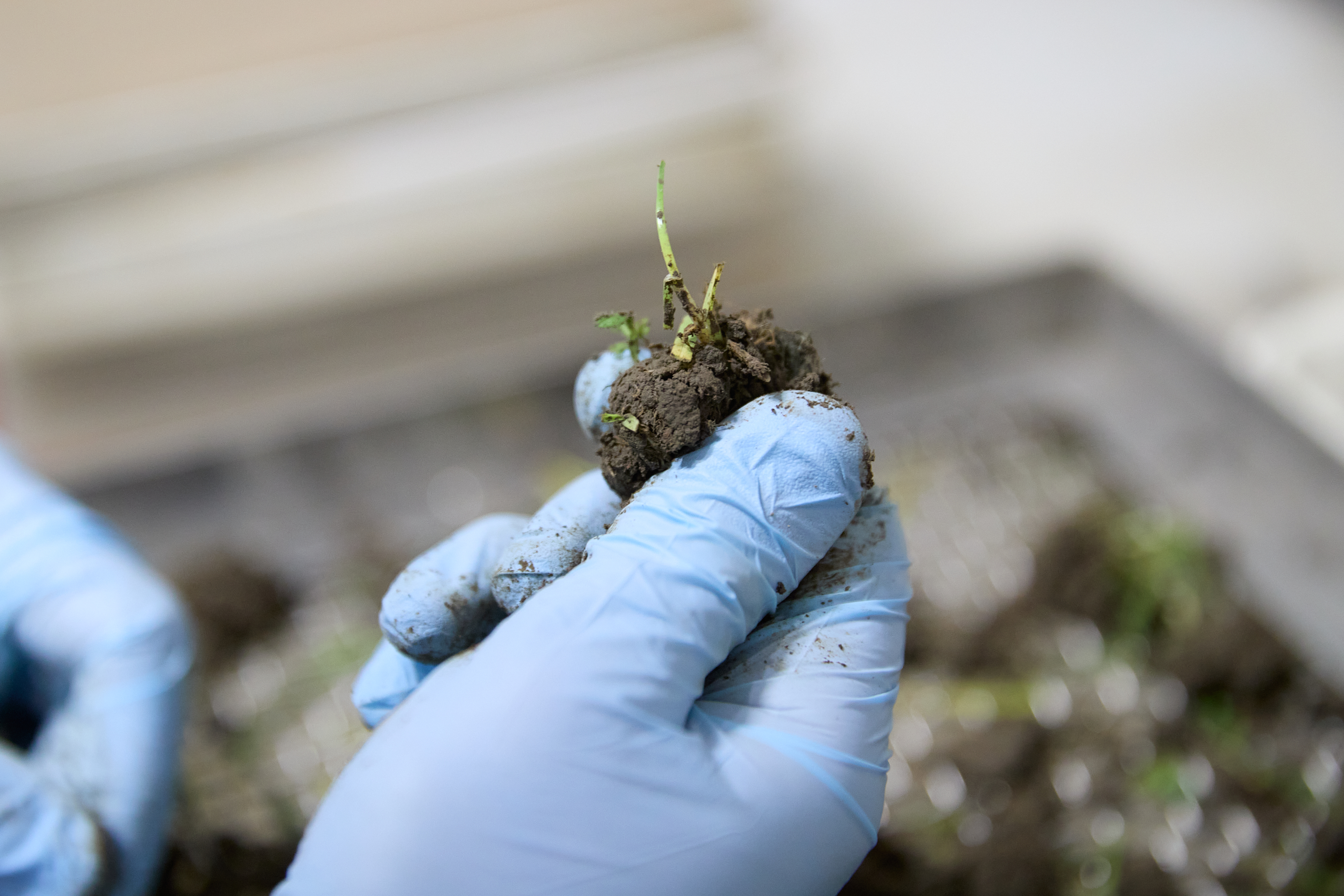
Agricultural and horticultural soils are tested to measure the soil fertility and soil quality for monitoring fertiliser programmes and to assist with identifying nutrient deficiency or toxicity.

Why test soil?

Soil testing takes the guesswork out of nutrient management and allows sound decisions to be made for optimal use of fertiliser for sustainable production. However, historical land use will affect nutrient levels, with soils under intensive cultivation often having abnormal levels of some nutrients due to previous management practices and fertiliser programmes.

The value soil testing delivers

  • Measure whether soil nutrient levels are high enough to sustain the desired level of plant growth.
  • Indicate the existence of any deficiency, excess or imbalance of major nutrients.
  • Provide a scientific basis on which to assess fertiliser and lime requirements of crops, pastures and turf.
  • The Organic Soil Profile provides a measure of soil quailty; testing the soil organic matter, potentially available nitrogen, total nitrogen and carbon: nitrogen ratio.
  • The Hot Water Extractable Carbon test is recommended as a good indicator of microbial activity in the soil, as it is highly correlated with microbial biomass carbon and aggregate stability.
  • A useful package of tests for assessing soil health is provided, being the Soil Health package [SoilHealthp]. This includes the Basic Soil profile, the Sulphur profile, Anion Storage Capacity, the Organic Soil Profile and Hot Water Extractable Carbon. Additional testing for heavy metal contaminants such as total cadmium and total copper may be important in some instances. 

Soil tests measure only a fraction of the total pool of nutrients available to plants (immediate and medium term) so it is important that standard New Zealand methods of sampling and soil analysis are used so the results are meaningful and can be related to plant growth under New Zealand conditions.  
Agricultural Soil Testing

Choosing the right test option for your situation and interpreting the test data is important and we suggest you contact your local fertiliser representative, rural merchant supplies store or consultant for advice. However, for pastoral soils, the Basic Soil Profile and Sulphur profile are recommended as the key tests to do. Where reactive phosphate rock (RPR) fertiliser has been used, the resin phosphorous (RP) test should be added. For arable crops like maize, the Basic Soil profile, Sulphur profile and available-N tests are recommended. Other soil tests include: anion storage capacity, total sulphur, the organic soil profile for soil quality, aluminium, boron, EDTA trace metals, Mehlich 3 trace metals and more. 

For a more complete listing of our soil testing options and the associated test details, simply download our easy-to-read technical note specifically designed for soil testing.

Horticultural Soil Testing

Growing high-value horticultural crops comes with unique soil fertility management challenges. Understanding the soil nutrient profile will not only improve the yield of your crop, but also long-term plant vigour and resilience. We recommend that you get advice from your local fertiliser representatives, rural merchant supplies store or consultant to ensure that not only do you choose the right test for your situation, but that you also maximise the value of the data generated. However, for horticultural soils the Basic Soil Profile, Sulphur profile and available nitrogen (AN) test are usually recommended. For avocado orchards the Basic Soil and Mehlich 3 trace nutrients test is the default testing. For kiwifruit orchards the Basic Soil Profile and available nitrogen (AN) test is recommended. For vegetables, the Basic Soil Profile, Sulphur profile and available nitrogen test is usually recommended. Other soil tests include boron, aluminium, EDTA trace nutrients and more. Where reactive phosphate rock (RPR) fertilisers have been used, the resin P (RP) test is recommended to measure plant available phosphorus. The Organic Soil Profile measures the soil quality and includes total nitrogen, potentially available nitrogen, organic matter (total carbon) and the soil total carbon: total nitrogen (C:N) ratio. More recently, a new potentially mineralisable Nitrogen (PMN or HWEON) test has been developed for crop soils. This test has been field calibrated for a range of crops and is considered to enable better nitrogen fertiliser management decisions than the older AN test.


Lifestyle Block Testing

For small block holders or home gardeners, testing your soil fertility and plant health can provide useful information. A technical note is published in the website resources section and may be a helpful guide for selecting appropriate tests. As an independent testing laboratory however, we recommend that you enlist the support of your local merchant supplies store, or other consultant, to help guide you through a suitable testing plan and associated fertiliser recommendation plan for your lifestyle block.

Latest Stories

Connecting with Farmers and Growers at Fieldays

We are looking forward to our 28th year at Fieldays this year, connecting with farmers, growers and industry professionals from across New Zealand. Events like Fieldays are a great opportunity for our team to get out from behind the desk, hear directly from the sector, and continue building strong relationships within the agricultural community.
  21 May 2026

A Record-breaking Day for Kiwifruit Samples

Hill Labs is a key service provider to Zespri and the kiwifruit industry, providing time-critical sampling and maturity testing services seven days a week. Zespri has strict maturity criteria that all orchards must pass before harvest to ensure consumers receive the best quality kiwifruit expected from the Zespri brand.
  21 May 2026

Introducing Dairy Commodity Product Testing and MALDI-TOF Identification

Customer needs continue to evolve - particularly across dairy commodity testing and microbiological identification - and over the past year, these topics have become increasingly common in conversations with our clients. In response, we have expanded our laboratory scope to include ISO reference method testing for dairy commodity products, alongside the introduction of MALDI-TOF identification technology.
  21 May 2026

What our customers have to say

"We've always found them to be responsive in getting results back and giving advice on problems we might be facing."

Andrew Hutchinson, Technical Manager, Turners & Growers

"We strongly recommend Hill Labs as a sound testing service provider to the honey industry."

Nick Walker, Technical Manager, Egmont Honey

"Their sample registration system has made things simple and seamless - collect, scan and send!"

Mathew Bannister, Compliance Manager, First Fresh New Zealand

Accreditations

As a New Zealand accredited laboratory by International Accreditation New Zealand (IANZ), Hill Labs' commitment to quality is tantamount to our overall operating philosophy. We pride ourselves on the quality of our work.